Playing surface
Padel court sand infill maintenance
We assess padel court sand infill, redistribute it across the artificial turf and agree any top-up needed for the surface.
How sand maintenance works
During play, sand moves from high-use areas towards the edges and corners. We inspect the surface and existing infill, then brush and redistribute the sand.
If the court needs more, we check the turf manufacturer’s guidance before agreeing the type and amount. The club supplies the sand; we carry out the agreed top-up and distribution.
What happens during maintenance
Sand-level check
We look for uneven sand, bare fibres and areas where infill has built up.
Redistribution in high-use areas
Sand is brushed away from build-up areas and redistributed towards visibly low sections.
Suitable sand for top-ups
If infill is low, we agree the sand type and volume for the turf. The club provides the material for the top-up.
Surface condition noted
We point out bare, hard or visibly uneven areas that may need further attention.
The club supplies the sand
We check the existing infill, then agree the sand type, amount and any top-up work before adding material.
Common questions
How do I know whether more sand is needed?
Bare or uneven areas can be a sign that the infill needs attention. We check the actual sand level and distribution on site.
Can sand maintenance be done in winter?
Indoor courts can be maintained throughout the year. Outdoor work depends on temperature and moisture.
Who supplies the sand?
The club supplies sand for top-ups. We agree the type, quantity, work and price before adding it.
How much sand should be added?
There is no single quantity for every court. It depends on the turf system, manufacturer guidance and current infill level.
Sand maintenance in practice
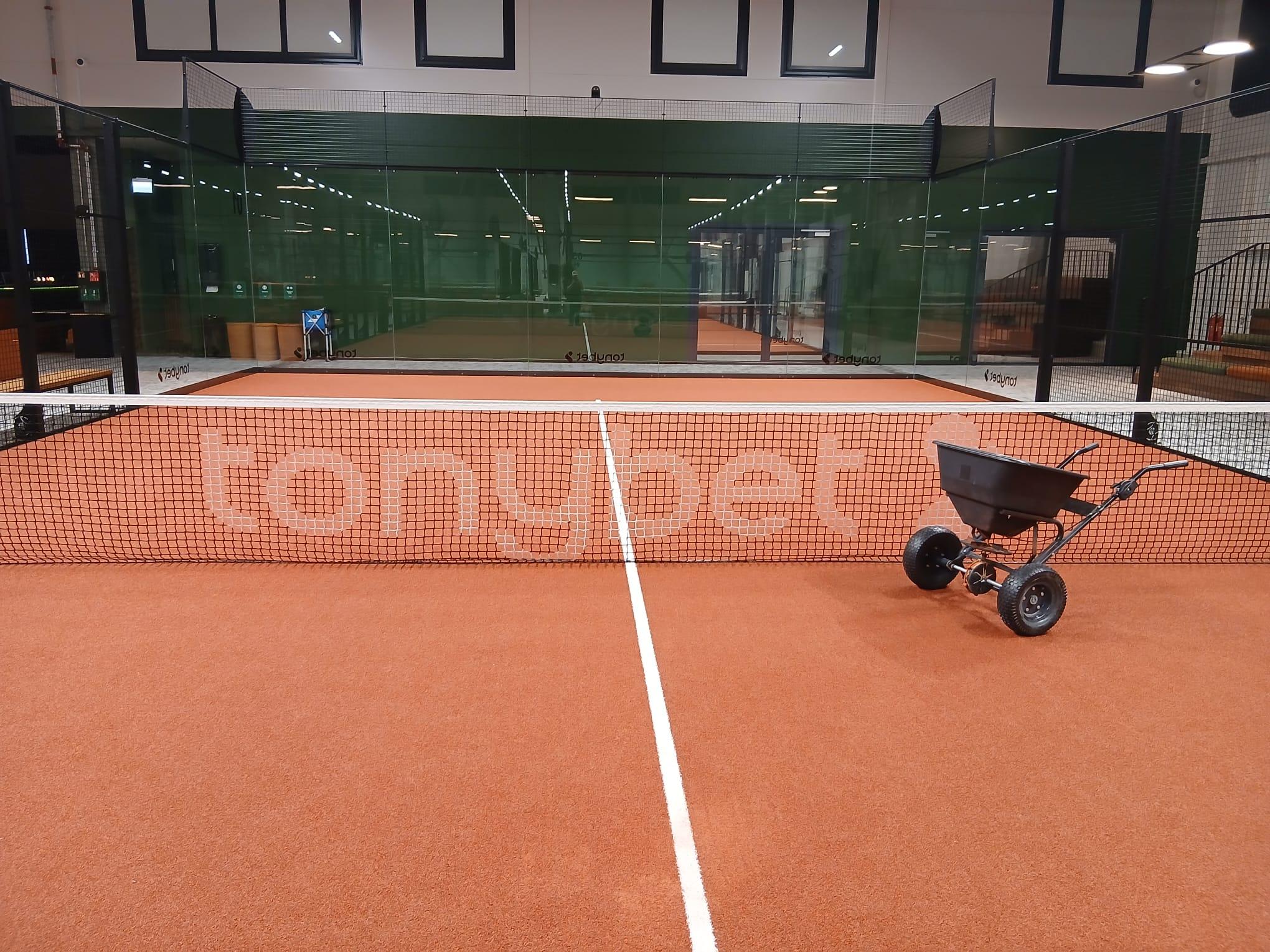
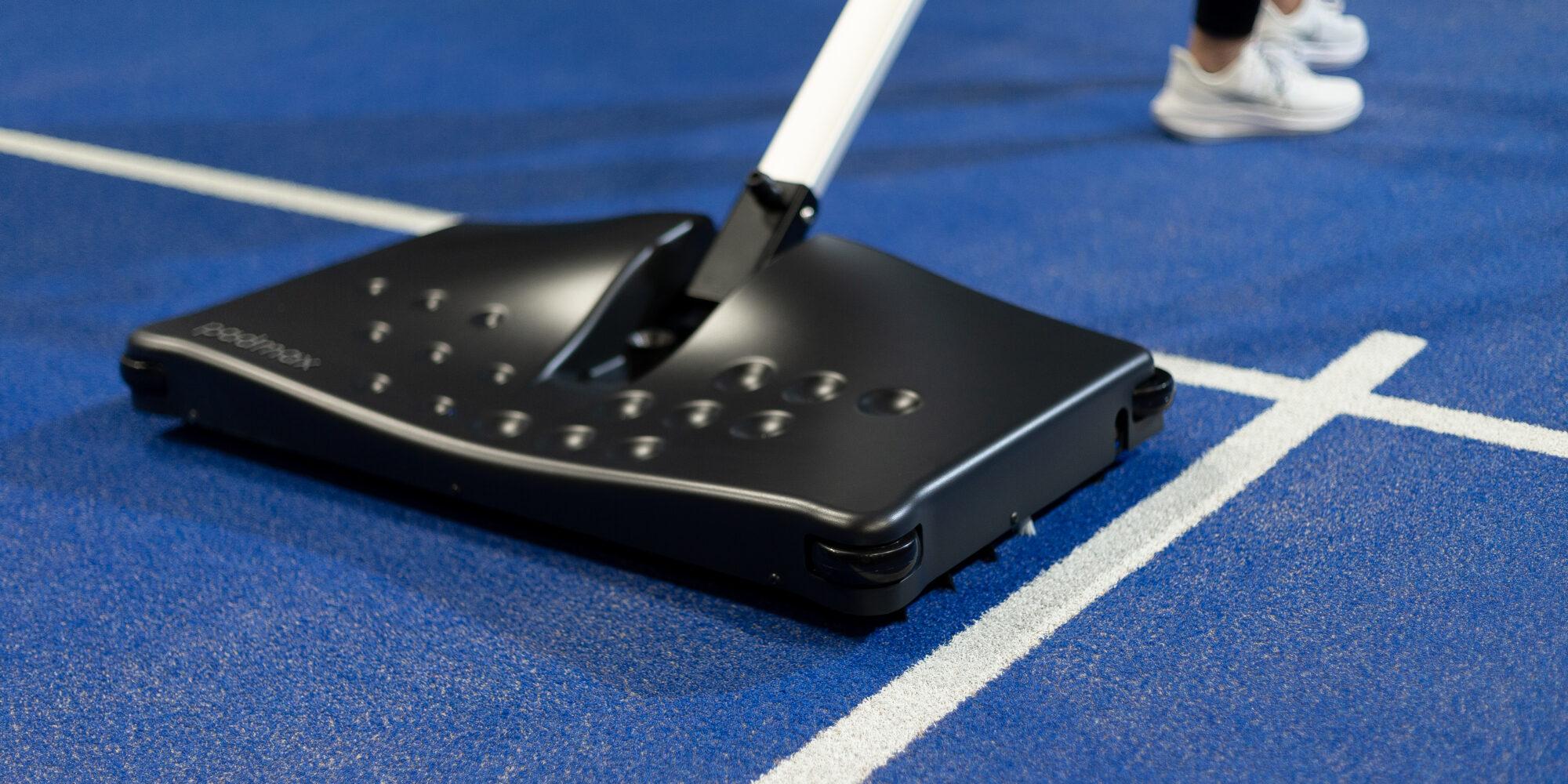
A spreader adds sand where needed; brushing helps level the existing infill.